Preview
Build your website and try everything before you go live.
$0free
Online store for coffee
Describe your coffees and Cornerrr builds a roaster’s shop: single origins and blends with bag size and grind as options, a coffee subscription, shipping rates for bags and a Stripe checkout. Every sale goes to your own account.
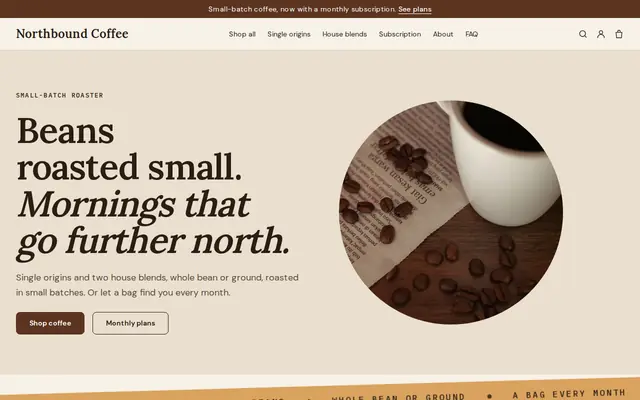
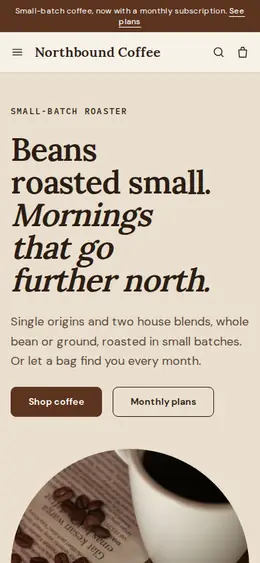
Step by step
People buying specialty coffee care about freshness. Roast on fixed days, ship within a day or two, and say “roasted to order every Tuesday” on the home page and on every bag.
Origin, farm or co-op, process, altitude, variety and tasting notes, in the same order on every coffee. Buyers compare these, and they make your page more useful than a supermarket listing.
Whole bean, espresso, filter and French press as options on one product, with two or three bag sizes. Track stock per size so a sold-out large bag doesn’t close the small one.
On the Growth plan, a “roaster’s choice” or a fixed coffee can be billed by Stripe every two or four weeks, with free trial days if you want them. Subscribers give you a roast volume you can plan around.
One bag often goes as a small flat parcel, while a kilo or a two-pound bag needs a box. Weigh your common orders, set fixed rates that cover them, and add a free-shipping code above an order amount.
Cafés, offices and restaurants buy by the kilo or the pound. List wholesale “price on request” and ask on the form for their weekly volume and what they brew with.
Food and drink
Products with photos, options, prices and stock, a cart and a Stripe checkout.
Built in
Each coffee is one product with grind and bag size as options, each with its own price and stock. Checkout stops when a size runs out, so you never sell beans you haven’t roasted.
Weekly, every two weeks or monthly, on the Growth plan. Subscribers see their coffee in their account, and when they want a different grind they email you.
Wholesale products hide their price and cart button. Cafés send their volume and brewing setup through a form, and the request lands in your Inbox for you to quote.
Stripe Tax can calculate sales tax or VAT on each order once it’s active on your Stripe account, and business buyers can add their tax ID at checkout.
Ready-made themes
Made for Coffee roasters, Tea shops, Cafés
Bold and modern for roasters, coffee shops and tea sellers.
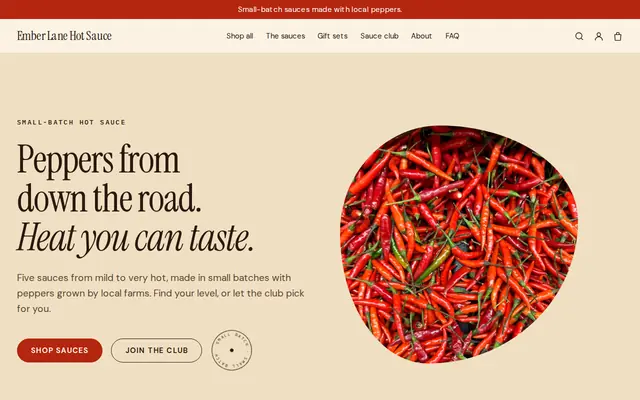
Made for Sauces and condiments, Snacks, Food gifts
Loud, playful and colourful for food makers with personality.
Before you start
In the UK and EU, roasting coffee to sell means registering as a food business. In the US, some states let small roasters work under cottage food rules and others need a license or a commercial space. Check before you sell the first bag.
In many places coffee beans count as food with a lower or zero tax rate, while mugs, grinders and brewers are taxed at the standard rate. Check how this works where you sell, and ask an accountant if you’re unsure.
Fresh coffee releases gas for days after roasting, so use bags with a one-way valve. Put the roast date on the bag, not only a best-before date, because coffee buyers look for it first.
General information to help you get started, not legal advice. Rules differ by country, state and product, so check the ones that apply to you.
How it works
A sentence or two is enough: what you do, who it’s for and how people buy from you.
Cornerrr writes your pages, adds your products or services, and picks the colours, fonts and look. It takes about a minute.
Link a Stripe account, or create one in a few minutes. Your customers pay you directly.
Publish on your free Cornerrr web address, or use your own. Change anything later by asking.
Payments
Payments go through your own Stripe account, straight to you. Your customers see the methods you turn on in Stripe that work for their country and currency.
Selling in Europe or the US? United States, United Kingdom, Germany, France, Netherlands, Ireland and every country we cover.
Pricing
Build and preview for free, no card needed. Every paid plan starts with a 14-day free trial, and Cornerrr adds no transaction fees.
Build your website and try everything before you go live.
$0free
Go live and start selling.
$19a month
Most popular
For growing businesses with subscriptions and deliveries.
$49a month
For several stores and bigger catalogues.
$99a month
Questions
It depends where you roast. Most places treat roasting as food production, so you register or license your premises as a food business, and some US states let small roasters work from home under cottage food laws. Check with your state or local authority.
On the Growth plan, add a product as a subscription and choose how often Stripe bills it, such as every week, every two weeks or every month, with optional free trial days. Subscribers see it in their account.
Offer both. Many home buyers don’t own a grinder, and grind as an option keeps one product per coffee. Recommend whole bean on the page for freshness and let them choose.
Many roasters aim for coffee to arrive within about a week of roasting and suggest drinking it within a month or so. Ship soon after you roast and put the roast date on every bag so customers can judge.
No. You describe your business in your own words and Cornerrr builds the website. Afterwards you change things by clicking, or by asking the assistant in plain words.
Building and previewing your website is free, with no card needed. To go live and take payments, choose a plan from $19 a month. Every paid plan starts with a 14-day free trial; a card is needed to start it.
Describe what you sell and see your shop in about a minute. It’s free until you go live.